What Are Exosomes, and What Can They Do for Your Skin?
Exosomes carry signals between cells. At Perfectus Derma we apply them to the skin straight after microneedling. Our nurses explain where they come from, what the research says and who they don't suit.
In this article
- What are exosomes?
- What skin improvements might you notice?
- Are exosomes stem cells, and can they change your DNA?
- Where do the exosomes used on skin come from?
- Are exosomes put on the skin or injected?
- What does the research say about exosomes for skin?
- How do exosomes compare with PRP?
- Who should not have exosome treatment?
- Are exosomes worth considering for your skin?
Perfectus Derma Aesthetics is a nurse-led clinic inside UNTIL Soho, 111 Charing Cross Road, London. Co-founder Terry Robson, a Registered Nurse and Independent Prescriber, explains what exosomes are and how the clinic uses them.
What are exosomes?
Exosomes are tiny messengers that cells naturally use to communicate with one another. In skin treatments, Perfectus Derma is interested in their potential to support cellular communication and the skin’s natural renewal processes, including fibroblast activity and collagen production. Fibroblasts are the cells in your skin that make collagen.
Exosomes are still relatively new in the medical aesthetics field. Most patients have heard of them, often through social media or newspaper articles or magazines. But they don’t necessarily understand what they are or how they work.
Our exosome therapy page lists the concerns we use them for, including acne scarring, pigmentation and redness-prone skin.
What skin improvements might you notice?
When combined with microneedling, exosomes may help support improvements in overall skin quality, texture and hydration. Patients may also notice improvements in the appearance of fine lines, enlarged pores and uneven skin tone.
Exosomes are also being investigated for their potential role in supporting the skin’s natural recovery and renewal processes. However, research is still developing, and individual results can vary.
Are exosomes stem cells, and can they change your DNA?
At Perfectus Derma, one of the main concerns patients have is whether exosomes are stem cells or whether they can somehow change their DNA. They don’t. Exosomes aren’t stem cells, and this treatment isn’t altering a patient’s DNA.
The Purasomes Perfectus Derma uses are derived from bovine colostrum, the first milk a cow produces after giving birth, with no human stem cells or human-derived material. We think it’s important that patients understand the distinction and know exactly what we’re using, so we like to explain it thoroughly.
Where do the exosomes used on skin come from?
The exosomes Perfectus Derma uses are Purasomes, from bovine colostrum. They come from DermaFocus, which is a company that we’ve been partnering with for some time for our consumables. We did extensive training with DermaFocus when they launched their exosomes.
DermaFocus is the UK distributor, and Dermoaroma makes the product in Italy. DermaFocus says the colostrum comes from grass-fed cattle on an organic certified family farm.
We chose Purasomes from DermaFocus because we’re very particular about the product we bring into our clinic.
While plant-based and other alternatives are available, based on our clinical experience, we’ve been particularly pleased with the results we’ve observed using Purasomes. We have confidence in the product’s provenance, manufacturing standards and practitioner support, which is why it remains our preferred choice.
Are exosomes put on the skin or injected?
At Perfectus Derma, we only apply exosomes topically following microneedling. We do not inject exosome products because of the potential safety risks associated with this method of administration and work as per licensing and the products intended use.
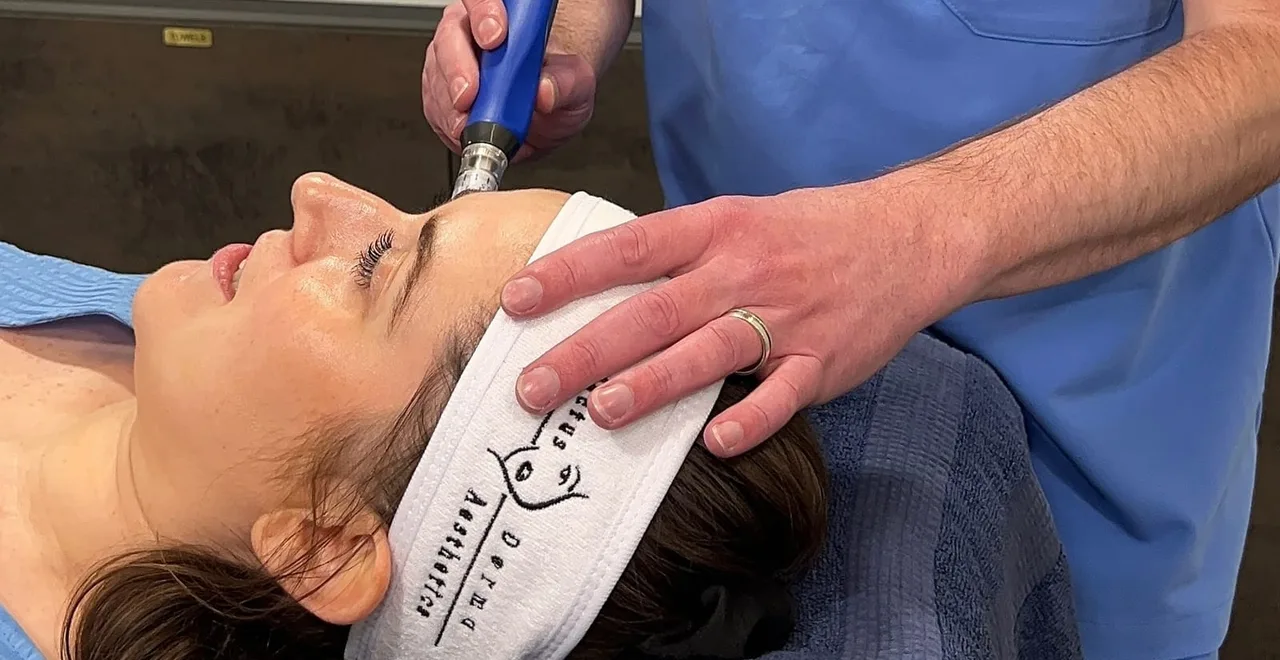
We use exosomes in conjunction with SkinPen microneedling, which creates controlled microchannels in the skin. These microchannels may help support the absorption of the topical product. Expect some redness for 24 to 48 hours afterwards. A course is usually three sessions.
What does the research say about exosomes for skin?
The research on exosomes for skin is still early, and most of it has been done in the lab. A 2024 review found 35 papers on exosomes for the skin. Only four were studies in people, and the authors said there is not yet enough evidence for wide use.
A 2026 review of microneedling with exosomes found eight studies. The largest had 60 people. It also said more evidence is needed.
One small trial shows what is being tested. In a 12-week study, 28 people had exosomes and microneedling on one side of the face and microneedling alone on the other.
The authors found the combination helped with signs of skin ageing on the treated side. Those exosomes were made from human fat-derived stem cells, a different source from ours.
For exosomes from milk and colostrum, a 2024 review found the skin research is still mostly in cells and animals.
Safety matters too. In 2019 the US Food and Drug Administration warned that no exosome products are approved, after serious harm in patients given unapproved products sold as exosomes.
How do exosomes compare with PRP?
Exosomes and PRP are both used to support the skin, but they come from very different places. PRP comes from a patient’s own blood, while the exosomes Perfectus Derma uses come from colostrum and go on the skin.
To make PRP, or platelet-rich plasma, you take the patient’s blood, you spin it, you extract the platelet-rich plasma from the patient’s blood, and then you use that to inject back into the patient’s skin.
PRP is also used after hair transplants, or to help retain hair for people who are losing it, and it has a lot of other uses as well.
| Topical exosomes | PRP | |
|---|---|---|
| Where it comes from | Bovine colostrum | The patient’s own blood |
| How it is given | Applied after microneedling | Injected into the skin |
| At Perfectus Derma | Offered | Not offered at present |
We don’t currently offer PRP. It involves taking a patient’s own blood and processing it, so it comes with different equipment, blood handling, clinical governance and regulatory considerations.
We’ve made a conscious decision that this is not a treatment we want to offer at present, because of all those extra steps. It’s something we haven’t branched out into yet.
Who should not have exosome treatment?
Not everyone is suitable for microneedling with exosomes, which is why Perfectus Derma always carries out a full consultation and medical assessment first. Our nurses wouldn’t treat you:
- during pregnancy or breastfeeding
- while you’re taking certain prescription acne tablets
- with an active infection
- with active skin cancer in the treatment area
- over open wounds, sores or significantly irritated skin
- with certain bleeding disorders or relevant allergies
Because Purasomes are bovine-derived, they’re also not suitable for patients who don’t wish to use animal-derived products, including vegan patients.
Are exosomes worth considering for your skin?
If you’re considering microneedling and would like to explore additional options to support your skin’s appearance and natural renewal processes, exosomes may be worth discussing. At Perfectus Derma, our nurses will assess your skin, explain the potential benefits and limitations, and recommend whether the treatment is suitable for you.
Before you book, it helps to know what to expect at an aesthetics consultation. You can also meet the nurses at Perfectus Derma.
Frequently asked questions
What are exosomes?
Exosomes are tiny messengers that cells release to signal to one another. In skin treatments, Perfectus Derma uses them for their potential to support cellular communication and the skin's natural renewal, including fibroblast activity and collagen production. They are applied to the skin after microneedling.
Are exosomes stem cells?
No, exosomes aren't stem cells, and the treatment doesn't alter your DNA. The Purasomes used at Perfectus Derma are derived from bovine colostrum, with no human stem cells or human-derived material. Our nurses explain exactly what is being used at your consultation, before any treatment.
Are exosomes injected at Perfectus Derma?
No, Perfectus Derma uses exosomes only as a topical treatment. They are applied to the skin straight after SkinPen microneedling, which creates controlled microchannels in the skin. These microchannels may help support the absorption of the topical product. Our nurses do not inject them.
Does Perfectus Derma offer PRP?
Perfectus Derma doesn't offer PRP at present. PRP is made from a patient's own blood, so it needs different equipment, blood handling, clinical governance and regulatory steps. Perfectus Derma has made a conscious decision not to offer it for now.
Are exosomes safe?
At Perfectus Derma, exosomes are applied topically following SkinPen microneedling, never injected. Every treatment begins with a consultation and medical assessment to determine suitability. Some redness is common for approximately 24 to 48 hours following microneedling. Our nurses will explain the potential benefits, limitations and risks before treatment.